
Articles

 Place de la Concorde Obelisk History Right in the heart of Place de la Concorde stands something that feels a little out of place. A giant ancient Egyptian monument. Yep. Paris looked at its elegant fountains, fancy buildings, revolutionary history, and said, "You know what? This needs a 3,000-year-old rock from Egypt." And that's exactly what it got. This is the story of the Luxor obelisk, a massive stone needle that once stood in front of a temple in Luxor, Egypt, and somehow ended up in the middle of Paris traffic. Let's rewind about 3,300 years. Back in ancient Egypt during the reign of Ramesses II, a guy who loved statues almost as much as he loved himself, two massive obelisks were carved out of a solid granite piece. We're talking about a single block of stone over 20m tall, weighing around 230 tonnes. No trains, no trucks, just ancient engineering and probably a lot of very tired workers who supposedly received free Egyptian bread, accommodation, and medical care. And oh, uh, free beer. 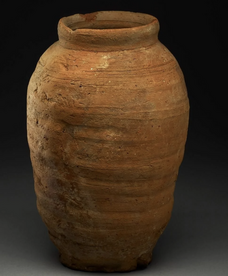 These obelisks were placed at the entrance of the Luxor temple, standing like giant welcome signs, except way more intimidating. Luckily, on my last trip, I was in Luxor and took this picture that shows a missing obelisk to the right of the entrance. 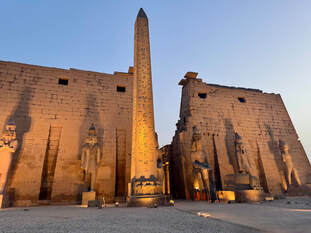 From this vantage point, in front of the pylon, the obelisk on the right is missing. I mean, gifted to France. Fast forward to the 1800s. Egypt under the rule of Muhammad Ali Pasha decides to gift one of these obelisks to France. Yes, gift. Imagine giving away a 230 tonne ancient monument today. That's like gifting someone the Eiffel Tower because you're cleaning out your garage. France, of course, says, "I'll take it." But there was just one problem. How do you move a 3,000-year-old 230 tonne stone pillar from Egypt to France without, you know, dropping it into the Mediterranean? Enter the ultimate 19th century engineering flex. The French built a special ship, basically a floating box. designed specifically to carry the obelisk. They had to lower it carefully in Egypt, drag it to the Nile, float it to the sea, sail it across the Mediterranean, then bring it up the Seine River to Paris. All of this took years. One of the many challenges was getting the obelisk onto the ship. The engineers decided instead of trying to lower the obelisk onto the onto the deck where it might slip and smash the deck, they said, "Let's open the front of the boat and slide the obelisk in." Then we just need to rebuild the front of the ship. And with this process, there's another bonus. With the obelisk below deck, the ship wouldn't have to worry about passing under the bridges as it approached Paris. Honestly, it's kind of amazing they didn't just give up halfway and say, "You know what? You can keep it." Finally, in 1833, under King Louis-Philippe I, the obelisk arrived in Paris, but it wasn't erected in Place de la Concorde until 3 years later, 1836. Why? Well, King Louis deemed the base pedestal not politically correct. It depicted baboons in their natural state, not wearing clothes. So he contacted Egypt and said, "Could you send more granite? We need to design a new base. The base you see now outlines all the engineering required to transport and raise the obelisk." So King Louis really only half solved his politically correctness issue. With the new base, Parisians and tourists would not be subject to the naked baboons at Place de la Concorde. Why only half solved, do I say? Most tourists who visit Place de la Concorde also visit the Louvre where the original baboon laced base resides. This is the original base of the obelisk in Place de la Concorde from 3,300 years ago. 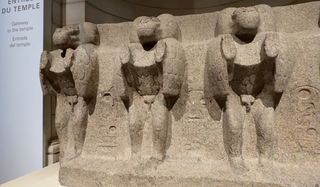 Baboons are significant in Egyptian mythology. One role is to guide pharaoh's body to the afterlife (also see wall in King Tut's tomb). In return for the obelisk, France gifted Egypt a copper clock - that has never worked. Looks like all the expert transport engineers were assigned the obelisk part of the exchange. Oh, and remember how there were originally two obelisks in Luxor? France technically got both, but after realizing moving one was already a massive headache, they politely declined the second one in 1981. Smart move. So, next time you're in Paris having your croissant, standing at Place de la Concorde, take a second to look at that towering stone because that's not just a monument. It's a testament to engineering knowhow. There are now more Egyptian obelisks outside of Egypt around 30 than inside of Egypt. Some gifted, some taken. The one in Place de la Concorde holds a special designation as it is now the oldest monument in Paris!
0 Comments
Leave a Reply. |
AuthorCycling enthusiast looking for adventure and researching the best accessories to help get there. Archives
June 2026
cycling |
 RSS Feed